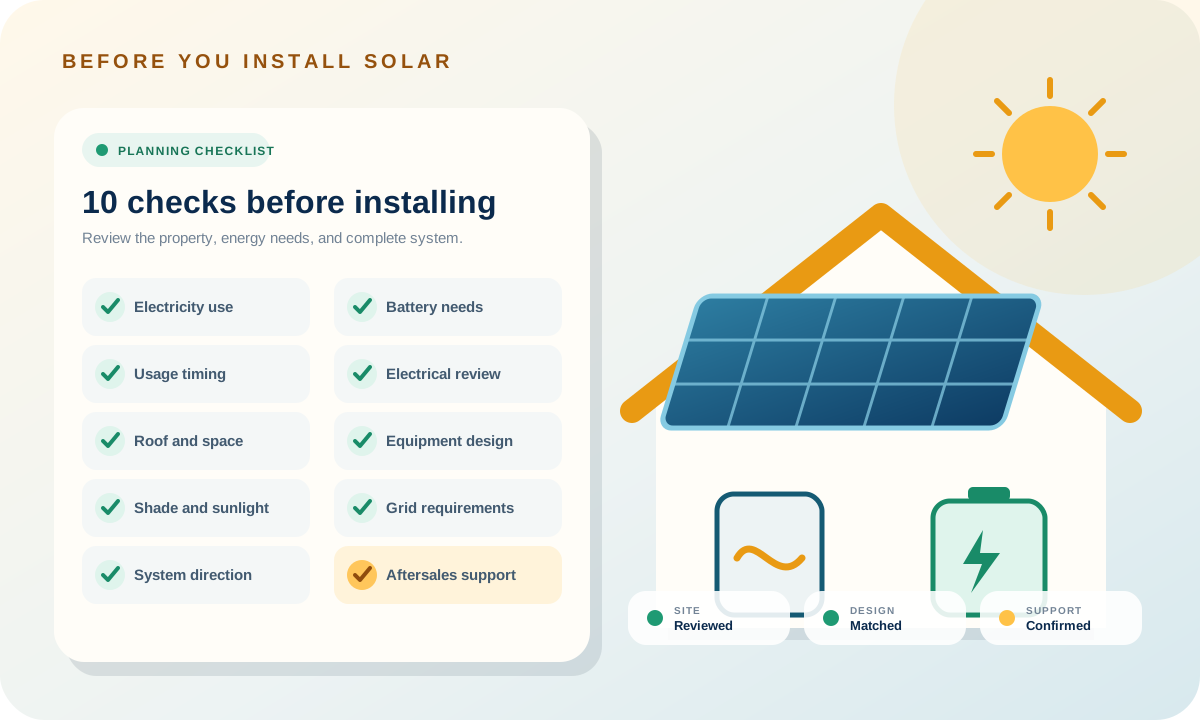
Checklist Before Installing Solar in the Philippines
Review electricity use, roof space, shading, system type, batteries, equipment, grid requirements, and aftersales before installation.
Read the full checklist
Bright Horizon Solar knowledge center
Practical, Philippines-focused guides about planning, energy flow, electricity-bill savings, system sizing, batteries, Net Metering, installation, and aftersales.
Latest article
Review electricity use, roof space, shading, system type, batteries, equipment, grid requirements, and aftersales before installation.
Read the full checklistMore solar guides
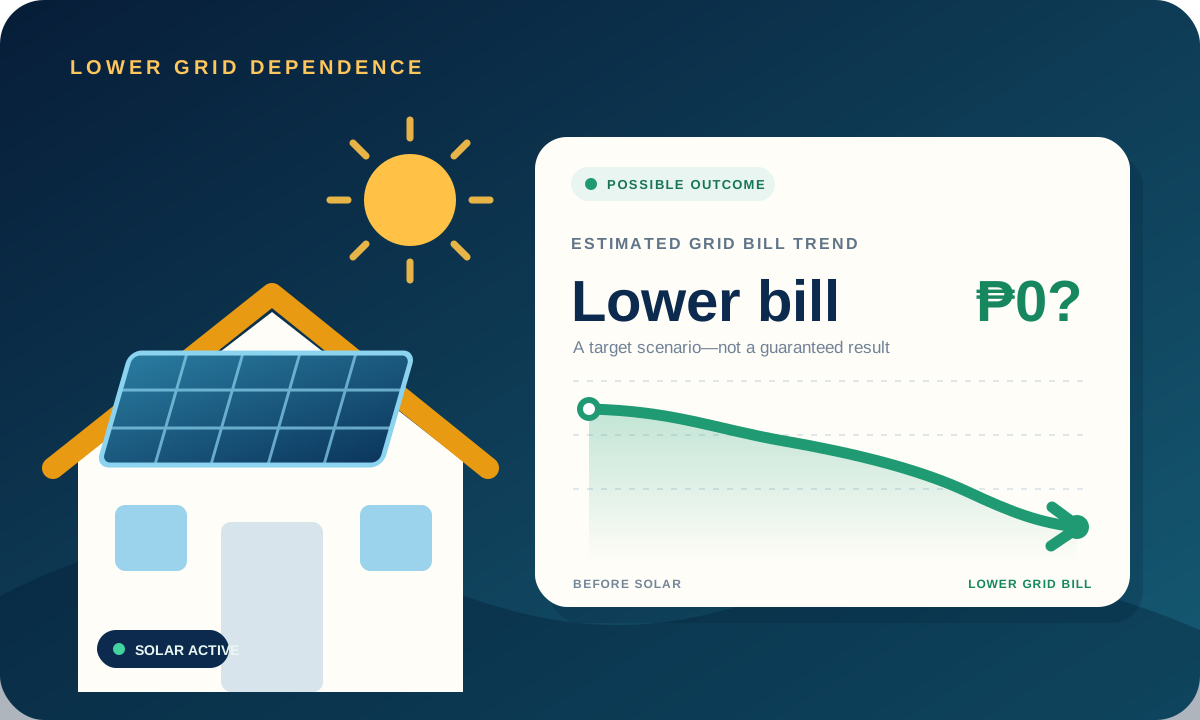
Learn when a zero or very low electricity bill may be possible and how usage, sizing, Net Metering, batteries, and site conditions affect the result.
Read the guide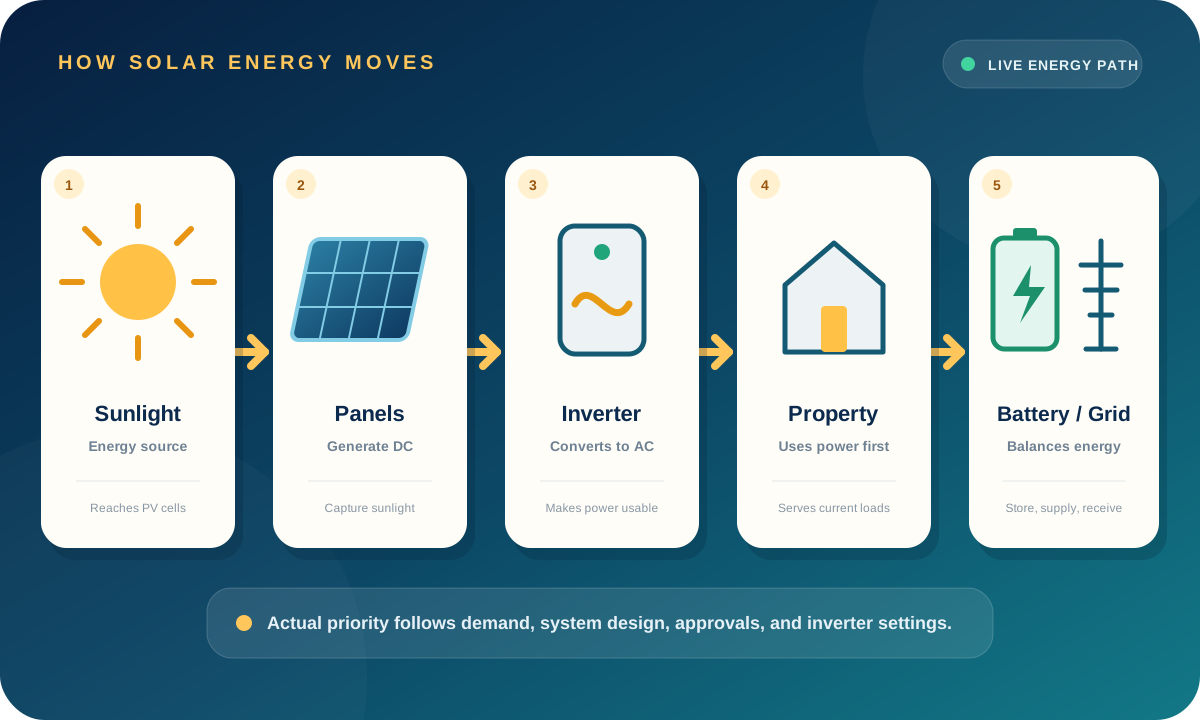
Follow electricity from sunlight through the panels and inverter to property loads, battery storage, and the utility grid.
Read the guide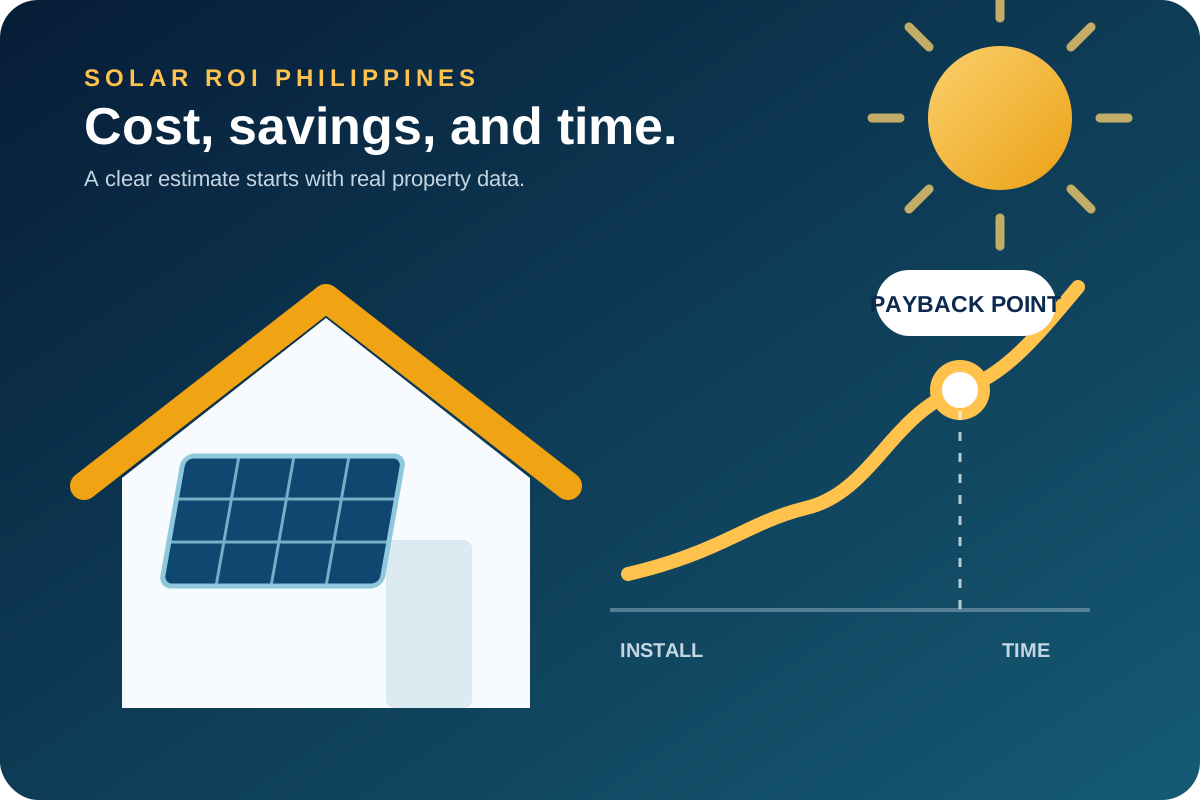
Learn how project cost, electricity use, solar production, rates, net metering, and batteries affect solar ROI and payback in the Philippines.
Read the guide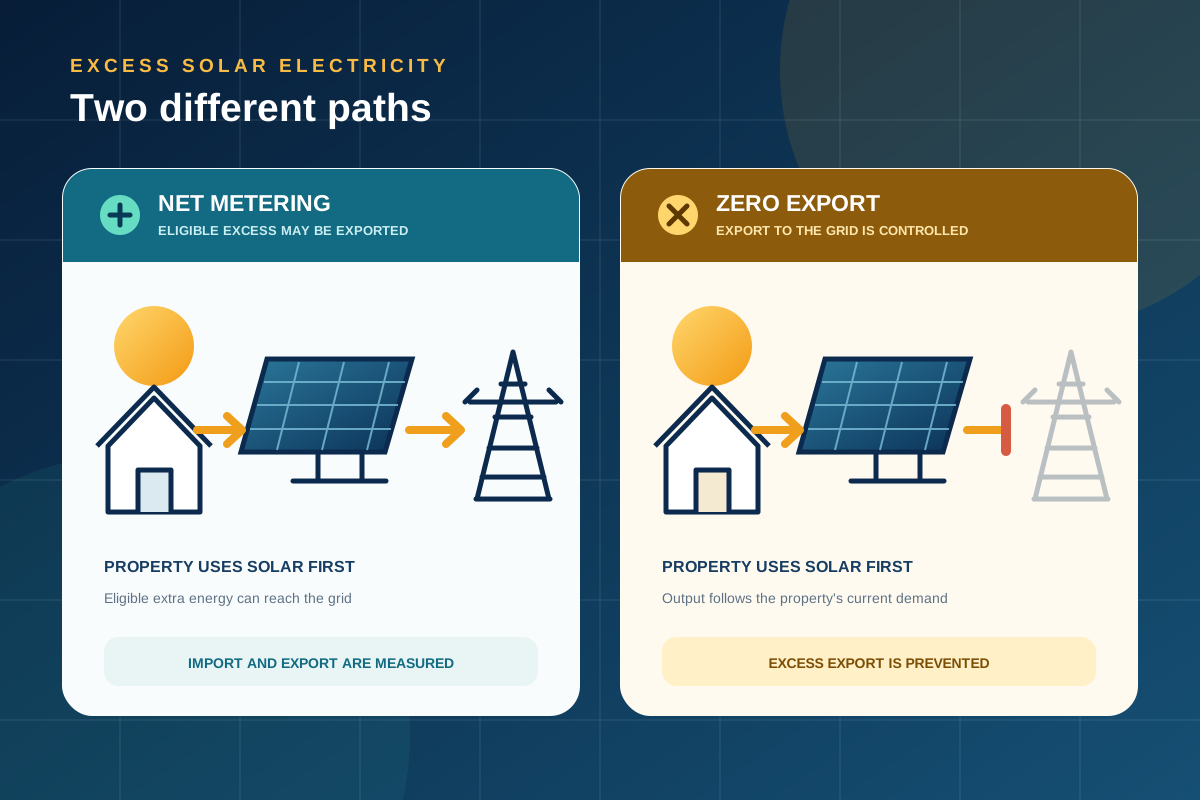
Compare how Net Metering and Zero Export manage excess solar electricity, utility credits, batteries, and grid connection requirements.
Read the guide
Learn how electricity use, usable roof area, shading, electrical condition, cable routes, and backup priorities shape the final solar design.
Read the guide
Learn why roof condition, mounting, flashing, sealing, waterproofing, and installation quality matter before solar panels are installed.
Read the guide
Understand the technical and property factors that affect solar capacity, system direction, and project cost.
Read the guideExplore solar topics
Prepare bills, property conditions, equipment questions, utility requirements, and aftersales expectations.
02Follow electricity through the panels, inverter, property, battery, and utility grid.
03Understand the conditions behind a very low or potentially zero amount due.
04Review project cost, annual net savings, assumptions, and long-term value.
Our editorial approach
Bright Horizon Solar articles use plain language, distinguish planning estimates from official quotations, and direct readers to current government or utility information when rules may change. Final recommendations remain subject to a technical assessment.
Plan with real inputs